The importance of being bored

I’ve grown up in a country and culture that put work and commitment to applying oneself as a paramount. My parents always taught me the need to dedicate all free time to something important and relevant, and have always considered laziness as a shame. So I’ve rooted in my behavior a certain feeling that every time I have free time, I need to fill it with an important task to be followed.
Now, I had a specific experience that disclosed a different story.
I was in a company that, in an unfortunate situation, failed: all work stopped abruptly and I found myself in an awkward situation in which our management was no longer providing any direction or objective.
All the hurry to deliver or build a better company was useless, no one was asking to perform, and a sense of desolation and emptiness appeared in all colleagues.
I spent many days astonished, without a purpose.
I’m used to planning and working in a very structured way, from daily tasks to yearly goals, and finding none of them recognized or even identified gave me a vertigo feeling, like missing the ground under my feet.
This condition gave me something new: the discovery that having unplanned time is incredibly useful to rethink and rebuild a vision of myself. I was spending my days reconsidering my experience, studying what my strong and weak points were, and I restarted learning new skills such as mastering PowerBI Analytics, exploring AI applications that at the time were still in very initial steps, or preparing for the PMP certification.
The situation lasted 6 months, in which I relocated and found a new opportunity in a new company and city, but I discovered that that pause was essential to enforce the trust in my competencies and experience—something that, when you are fully engaged in a job, you miss.
My takeaway was that even emptiness can help you to grow and build a better version of yourself.
1998 – Learning to love the work

When I was student at Politecnico of Torino I often wondered what would have been to work in a company since studing on books was so little exciting and quite sterile, I was worrying that spending may years of my life with same attitude or spirit of a student would have been disheartening to me, to say the least.
I was completely wrong: in 1998 I moved to my military service and started my (nearly unpaid) first full time work, I was hired in office role to manage payroll and permission for Alpine ATZ Company (yes, a military company) in Trento.
The schedule was demanding: 7:00 AM to 8:00 PM in a small office with three colleagues, under intense pressure from our Captain to deliver everything on time and with zero errors. Calling it stressful would be an understatement. Yet, that is when I discovered something fundamental about myself: I thrive on the challenge of learning, doing, and delivering. All the frustration from hard academic years transformed into a drive for dedicated work. I genuinely enjoyed the process and the satisfaction of exceeding a demanding stakeholder’s expectations.
When I finished my service I discovered a new power: I loved to work!
2007 – Time for a change

I was working in my first company since end of my military service and that was my real boot camp where I learned everything that was not written on books. It was part of FIAT ecosystem that had a strong tradition and professionalism with 70’/80′ flavour of management and engineering with extremly skilled person with strong attitude sometimes hard to interact with. HR were a cornerstone of the company strategy to select best leaders and draw growing path for younger employees.
I was changing my personal life and at the time and I was operating in Quality System and 6 Sigma Team, with a request to relocate in China. I always challeged myself in doing different experience outside my confort zone and that was really one of them.
Then I received a call from a friend asking if I was interested into a new opportunity in a small team and completely differet job industry: Aerospace.
I love aerospace and as in a sliding door scenario the decision to move away to a new company was anything but not an easy choice, since I was supported in my growth from the first days, but I was missing something, I wanted to feed my curiosity to explore the Aerospace business and I wanted a completely different environment to interact in a smaller context, and I wanted to achieve one of my dreams: building an aircraft.
So I moved in the new opportunity with a broken heart and tears in my eyes leaving dear colleagues and my city too.
For the next 12 years I had the privilege to work in and for aerospace companies and some time later, one morning my daughters asked me when leaving to office after having breakfast togheter: “Daddy, please build for us a new plane!”.
Dream achieved.
2008 – About speaking and understanding an Engineer
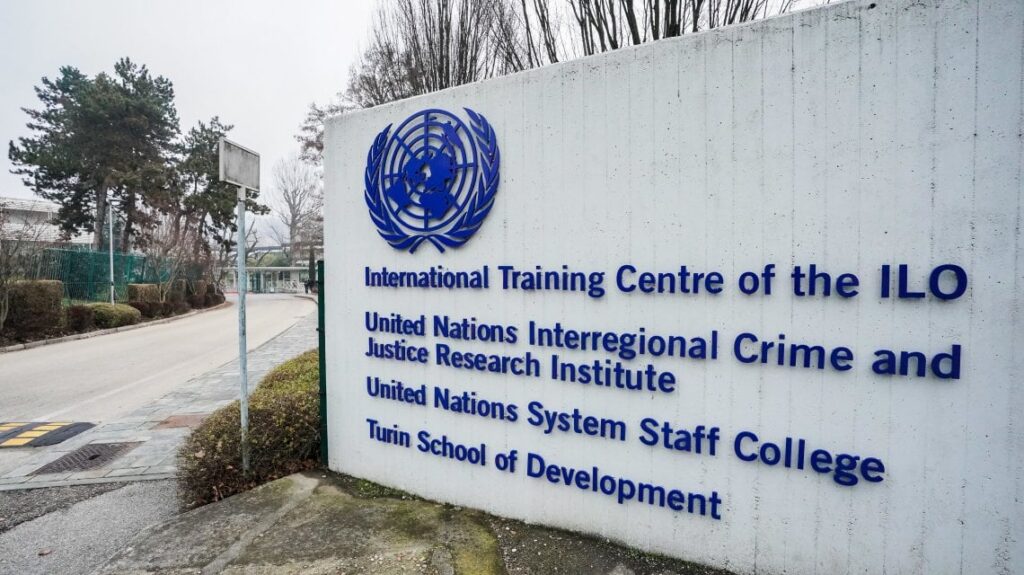
I do not recall exactly when I talked to a family friend, Victor. He worked at the U.N. in Turin and was a brilliant diplomat and teacher at international business schools on Corso Massimo D’Azeglio along the Po river. He was unfortunately ill with Alzheimer’s and quickly losing his ability to speak and communicate clearly, but he left me with a few words that helped me reshape my behavior in front of other people: we (as engineers) often speak a lot, but we do not communicate anything useful.
This happens for many reasons. One of them is that we communicate in a non-native language (as I’m doing now), but also because we often do not pay attention to delivering the message AND checking that it is understood. The rule is that around 70% of what we explain is lost in our communication. These data are rough and probably purely indicative of reality; anyway, my on-the-field experience proves that training sessions and workshops are rarely effective for the majority of the audience, who remain quiet or, at the first question, demonstrate that the course was a failure.
I have not found any magic formula for this, except to be patient and aware that I have to prepare good visual slides instead of rivers of tech words, provide good training material, take time, and accept repeating the same story multiple times to my audience. The conclusion is that we are humans with different brains, and our minds learn differently: we cannot force people to learn quicker, but we can improve ourselves to explain better.
Victor died a few years after that day, but I still carry with me the humility of a person who spent many years teaching people from all around the world, aware that a quantity of words is meaningless if not understood properly. Knowing that his illness tool away his greatest skill is still heartbreaking.
Sept 2026 – What do (A)I want?

Now everyone is under pressure to use AI tools to enhance their productivity and discover the magic that can boost our lives. My humble opinion is that what is happening is basically a carbon copy of the 2000 .com hysteria: everyone forcing themselves to position a tool or technology they do not understand, only to discover that there are no tangible outcomes. It seems coding is now core to the whole of humanity and all workers in the world have to write millions of lines of code for whatever purpose. But not all companies’ core business is coding, and when you start applying AI to more cross-functional processes, the gap between what you can do and what you can actually deliver widens hopelessly.
My experience with AI is focused on boosting knowledge and automating low-value tasks by creating documentation, collecting and merging data, and finding trade-off solutions that I evaluate and master first. Otherwise, I see it like a very prolific engineer writing a lot of ideas, but with little common sense or criteria applied to choose the right solutions. A simple example was the creation of a homemade cloud service for photo and media management: Gemini allowed me to deploy the full stack of the service from the HW to security services, but only by carefully trimming the requirements, double-checking all steps, and troubleshooting emerging issues with my experience. Otherwise, the assistant was desperately trying many wrong solutions with blind faith that it had identified the problems.
Yes, I understand that agents and the quick learning curve of these models are rapidly improving usability and efficacy to deliver, but once again, the requirements we provide them are core, and not knowing how and what we want is the fundamental error. As a wise Greek said, it is not the answer, but the question that makes the difference between brute ignorance and intelligence.
If you are reading my words on this site now, anyway, it is because I’m using AI despite my rant—otherwise, I wouldn’t have enough time to tinker like the nerd I was 30 years ago.
1999 – First Steps
I would like to start with a short story of my working journey: in 1999 I finished my 10-month Army service that was mandatory in Italy. I had the fortune to be called for a selection at COMAU for a 6-month stage starting the day after my “congedo”.
I was very nervous since there were 6 positions for around 30 participants, I was no longer a fresh student, and I felt very insecure about what the working market was looking for.
I’ve never been a competitive person, and thinking about being in a race to win the position was really scary.
Long story short: I won and I had my first real job that lasted seven years in an amazing company. COMAU working in robotics and automation was the best school I could learn from.
I discovered at that time that all the fear of the selection disappeared when I simply used my knowledge and common sense, and stayed honest in front of HR, sharing my small experience and my strong motivation.
I remember at the end of the selection one naive comment of mine on my desire to be responsible for my actions and being worried about being accountable for someone else’s actions and mistakes. The senior engineer who made the interview smiled and told me, “Dear young man, be ready that if you want to grow, you will always be responsible for other people’s actions.”